
GRAB YOUR FREE AI SEARCH OPTIMIZATION CHECKLIST
You've spent years mastering SEO. You understand how the latest Google algorithm ranks content. You know how to optimize for keywords, build backlinks, and structure your pages for maximum visibility.
Now all the buzz is about AI search optimization. ChatGPT citations. Perplexity rankings. Google AI Overviews. It sounds like a whole new discipline you need to master.
You don't.
Many marketers consider AI search to be a new burden. It's the logical evolution of the NLP path Google started in 2019 with BERT, a language model that helps search engines better understand the context and intent of words in natural language queries.
Many of the same principles that help you rank in traditional search are the ones that make you citable in AI-powered platforms.
The Rise of the Generative Engine
Google displays an AI Overview for 86% of all search queries. This isn't a minor feature rollout. This is how most people now experience search results.
NLP (Natural Language Processing) allows computers to understand human language the way people actually speak and write, rather than just matching keywords. Without NLP structure, your content may be invisible to the growing numbers of people searching for your brand or services with AI tools.
BERT processes nearly every query Google receives. Then, with Multitask Unified Model (MUM) Google introduced a model they say is 1,000x more powerful than its predecessor. These aren't just algorithm updates.
They represent a fundamental shift in how search engines understand language. Over time, Google stopped matching keywords and started understanding meaning.
When you search for "best way to fix a leaky faucet," Google doesn't just look for those exact words. The engine understands you want a step-by-step repair guide, not a philosophical discussion about plumbing excellence.
Why AI Traffic is Higher Value
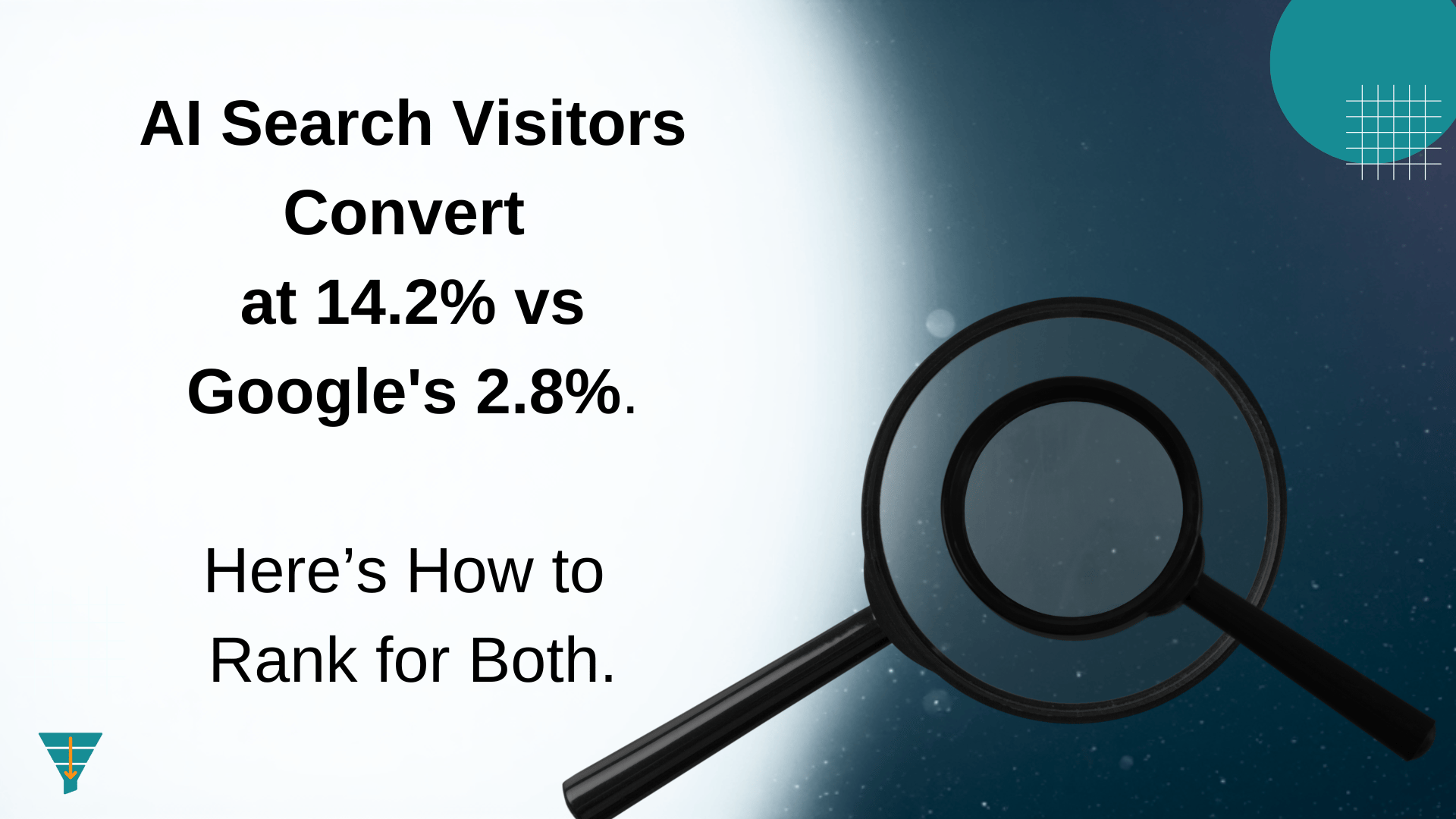
AI platform users convert at 14.2% compared to traditional search users at 2.8%, according to Semrush. That's a 5x conversion advantage.
AI-powered searchers who land on your page tend to be more informed. The AI already processed dozens of sources before sending them to you. They've been pre-qualified by the reasoning engine. They know what they're looking for and why your content matters.
Traditional search sends exploratory traffic. Someone types "marketing strategy" and clicks through ten blue links. AI search sends intentional traffic. The platform already determined you have the answer they need.
AI platforms generated 1.13 billion referral visits in June 2025. That represents a 357% year-over-year increase. ChatGPT alone reached 400 million weekly active users in early 2025.
This traffic isn't hypothetical. It's happening now. Companies that structure their content for NLP are capturing it. Companies that don't are losing market share to competitors they've never heard of.
The Technical Cheat Sheet
You don't need to rewrite everything. You need to apply three core principles.
Use declarative sentences. Structure them as [Subject] + [Verb] + [Object] for maximum clarity.
Before: "There are many benefits to our search process, and it is often chosen for important roles."
After: "Modified Retained Search provides a flexible hiring solution for companies seeking to fill executive leadership roles with strategic impact."
The first version makes AI engines work. The second version makes them cite you.
Name entities directly. Stop using pronouns and vague references.
Before: "This service helps companies grow faster."
After: "AI-Powered Growth Strategy helps B2B companies increase qualified pipeline by 40%."
AI engines can't cite "this service." They need concrete nouns they can reference and attribute.
Implement schema markup. Websites with proper structured data see 20-30% higher click-through rates.
Schema acts as a cheat sheet for AI crawlers. You're telling the engine exactly what each piece of content represents. Product schemas identify your offerings. FAQ schemas surface your expertise. Article schemas establish your authority.
You already use meta descriptions for Google. Schema markup works the same way for AI platforms.
The Content That Works for Both
You don't need separate strategies for SEO and AI search. You need content that follows NLP principles.
Write clearly. Use active voice. Put important information first. Limit each sentence to one idea. Name things directly instead of using vague references.
Google rewarded this approach when they launched BERT. AI platforms reward it now. The algorithm changed. The underlying principle stayed the same.
Content that's easy for humans to understand is easy for machines to process. Content that's clear to read is simple to cite. Content that answers questions directly gets surfaced in AI overviews and chat responses.
Your competition is already doing this. They're not doing twice the work. They're doing the same work with better structure.
What This Means for Your Content Strategy
Review your content through an NLP lens. Does each paragraph state one clear idea? Can someone understand your main point without re-reading? Does your introduction front-load the most important information?
Write complete thoughts in single sentences that make sense without the surrounding context. AI platforms extract individual sentences and present them as answers.
Audit your highest-traffic pages. Read them out loud. Circle every place you used "this," "it," or "that" without a clear antecedent. Replace those pronouns with specific nouns.
Find your longest sentences. Break them into shorter ones. Aim for 12-16 words per sentence on average.
Check your schema markup. Make sure you're using Product, Article, FAQ, and Organization schemas where relevant.
The Answer is Both
AI-powered search and traditional SEO both reward content that's clear, structured, and easy to understand. When you write with proper NLP structure, you create a durable asset for the future.
The brands winning in AI search aren't doing anything radically different. They're doing the fundamentals well. Clear writing. Logical structure. Direct language. Proper markup.
These changes improve your SEO. They also make you citable in AI search. One strategy. Two outcomes. How are you creating content that helps you show up for AI and traditional searches.
